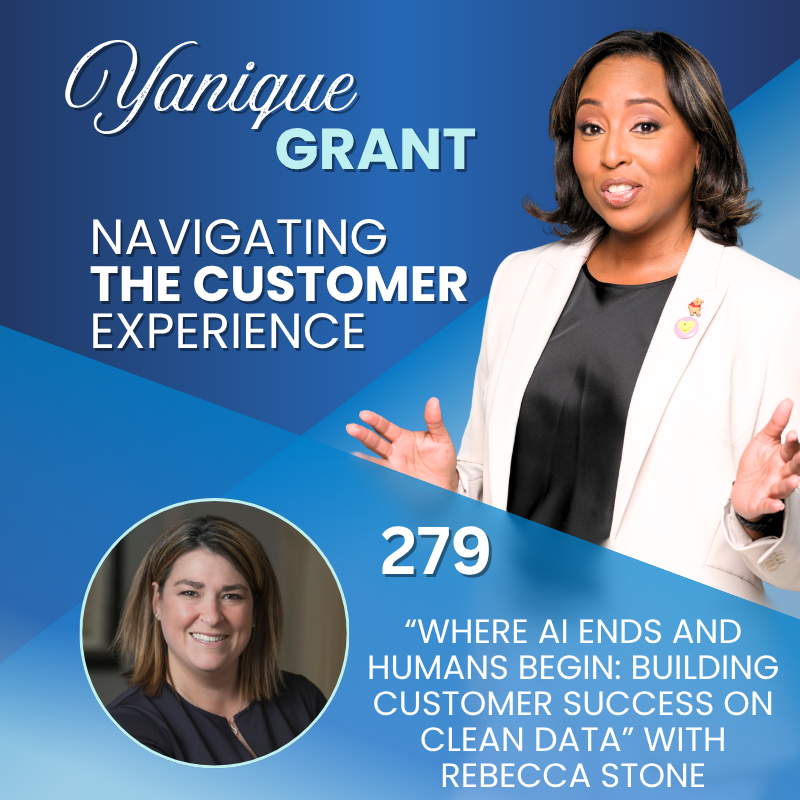
Rebecca Stone is Chief Customer and Marketing Officer at Plume, where she leads customer and marketing strategy, brand positioning, customer experience, and go-to-market initiatives. She brings more than 20 years of B2B technology experience spanning marketing, customer experience, and growth.
Before Plume, Rebecca served as Senior Vice President of Revenue Marketing and Customer Solutions Marketing at Cisco and as Chief Marketing Officer at Cisco Meraki. Across roles at Datasift, LiveRamp, and Meraki, she built the datasets that help organizations understand their customers’ journeys and actions. Along the way she witnessed the evolution of AI and the importance of clean, structured data firsthand.
Rebecca holds a Bachelor of Arts in Communications from UC Santa Barbara. What began as a love of writing has become a career long red thread: using mass communication tools to better understand and serve the customer.
Questions Yanique Asked
- Can you share, in your own words, a little about your journey and how you got from where you were to where you are today?
- If a leader has messy data and doesn’t know where to start, what’s the first move you’d recommend that will pay off for a better customer experience?
- You’ve watched AI evolve across your whole career, so as more of the customer journey gets automated, where do you draw the line between what AI should handle and where a human has to show up?
- What’s the one online resource, tool, website, or application you personally and professionally can’t live without in your business?
- Could you share one or two books that have had a very positive impact on you?
- What’s the one thing going on in your life right now that you’re really excited about, something you’re working on to develop yourself or your people?
- Where’s the best place our listeners can connect with you online?
- Do you have a quote or saying you revert to during times of adversity or challenge to get back on track?
Episode Highlights
From Journalist to Customer Champion
Yanique: Can you share, in your own words, a little about your journey and how you got to where you are today?
Rebecca started out expecting to be a journalist. She loved to write, which drew her into communications. When journalism didn’t fit, she looked for other ways to use her writing and found her way into marketing.
The red thread through every role since has been the customer. In her very first marketing role, she moved into retention and acquisition, traveling the country to train customers on the product and understand why they cancelled, then turning that data into campaigns that improved adoption. That foundation led directly to her role today, blending marketing with customer success so customers have a real voice inside the organization.
Messy Data? Start by Centralizing
Yanique: If a leader has messy data and doesn’t know where to start, what’s the first move you’d recommend?
Rebecca’s answer is clear: centralize everything first. Teams work across many tools such as the CSM platform, a JIRA ticketing system, the product itself, and marketing tools like Marketo and the website, plus data that lives only in people’s heads and inboxes. Pulling it all into one data warehouse or data lake lets you finally see the overlaps and spot what’s clean versus unclean.
Her classic example is the name problem. First and last name are one field in one system, capitalized differently in another, and lowercase in a third. A simple join program connects those records so ‘Rebecca Stone’ shows up as one customer, not four. Basic fixes like that create a step change. They give the frontline CSM the background they need and give the executive a clear view across every customer.
Where AI Ends and the Human Begins
Yanique: As more of the customer journey gets automated, where do you draw the line between what AI should handle and where a human has to show up?
Rebecca frames it as augmentation, not replacement. Think of calling a help desk when your internet is down. You explain your problem to the chatbot, then tier one, then tier two, then tier three, starting over every single time. AI’s job is to carry your context forward, so by the time you reach tier three the agent can say, ‘We’ve already done X, Y, and Z, so let’s start with A, B, and C.’
But the back and forth conversation is where the human belongs. There’s something to being made to feel important enough to talk to a real person when you’re struggling. Automate the simple things so your team has more time and attention for the complex, relationship driven ones.
The Tools She Can’t Live Without
Yanique: What’s the one online resource, tool, or application you can’t live without in your business?
AI is now a core tool for Rebecca. She calls Claude a game changer for building presentations and freeing up her time. But as she moves deeper into customer success, the tools that matter most are the ones that give her context.
Gong, Salesforce, and Marketo let her walk into a customer conversation or an escalation with the background already in hand, including the emails, the history, and the context, so she can be more personalized, confident, and prepared instead of starting cold.
Books That Stuck: Ideas and Teams
Yanique: Could you share one or two books that have had a positive impact on you?
Rebecca returns again and again to two books. Made to Stick by Chip and Dan Heath, about creating ideas that survive in a competitive market, was the first of theirs she read and has stuck with her most.
The second is The Five Dysfunctions of a Team by Patrick Lencioni, the foundation for how she builds teams, develops camaraderie, and works through the dysfunctions that surface so a team becomes more operationally sophisticated.
Building Teams: Exhausting and Empowering
Yanique: What’s the one thing you’re really excited about right now?
Rebecca recently stepped into leading customer success at Plume, a new discipline for her after eight months running marketing there. Building teams is what fuels her: learning the dynamics, diagnosing what needs fixing, and using frameworks like Five Dysfunctions to get a team functioning efficiently.
As Yanique noted, managing people is the hardest part of any business, equally exhausting and exciting. But once you push through, looking back at something lasting you’ve built feels really great.
Key Takeaways
- Centralize before you clean. Pull data from every tool, including CSM, ticketing, product, marketing, and people’s inboxes, into one warehouse or lake before trying to fix it.
- Small data fixes create step changes. A simple join program that reconciles inconsistent name fields can turn one customer showing up four ways into a single, accurate record.
- Serve both levels at once. Clean, centralized data gives the frontline CSM the context they need and gives executives a view across the entire customer base.
- Use AI to carry context, not replace connection. Automation should pass a customer’s history from chatbot to tier one to tier three so no one starts over.
- Protect the human moment. When customers are struggling, being able to reach a real person makes them feel important, so automate the simple things to free up time for the complex, relationship driven ones.
- Context tools build confidence. Gong, Salesforce, and Marketo let leaders enter escalations and customer conversations already knowing the background.
- AI can free your creative time. Rebecca uses Claude to build presentations, reclaiming hours for higher value work.
- Great teams are built deliberately. Frameworks like The Five Dysfunctions of a Team help leaders diagnose and work through the dynamics that hold teams back.
- Ideas need to be built to stick. Made to Stick is a reminder that a strong idea must be designed to survive in a competitive market.
- Excellence comes from hard work and persistence, the Colin Powell idea that keeps Rebecca on track through challenge.
Timestamped Topics
- 00:00 Introduction and Guest Bio
- 01:00 Rebecca’s Career Journey
- 03:05 Fixing Messy Data: Start by Centralizing
- 05:05 The Name Problem: One Customer, Not Four
- 05:55 Where AI Ends and the Human Begins
- 08:25 The Tools She Can’t Live Without
- 09:55 Books That Stuck: Ideas and Teams
- 11:18 Building High Performing Teams
- 12:50 Connect with Rebecca
- 13:12 Rebecca’s Guiding Quote
- 13:45 Wrap Up and Where to Follow
Featured Resources
Books Mentioned
- Made to Stick by Chip Heath and Dan Heath
- The Five Dysfunctions of a Team by Patrick Lencioni
Tools and Platforms
- Claude (AI for building presentations and freeing up time)
- Gong (conversation intelligence and customer context)
- Salesforce (CRM and customer data)
- Marketo (marketing automation)
Connect with Rebecca Stone
- LinkedIn: Rebecca Stone, connect and send her a message
- Company: Plume
Rebecca’s Guiding Quote
“There are no secrets to success. It is the result of preparation, hard work, and learning from failure.” This Colin Powell quote has been on Rebecca’s wall for years as a reminder that persistence and hard work deliver excellence.
About Navigating the Customer Experience
A globally recognized podcast hosted by Yanique Grant, featuring leaders and innovators sharing insights on leadership, business growth, customer experience, and exceptional service delivery.
Follow Us
- X (Twitter): @NavigatingCX
- Facebook: Navigating the Customer Experience Community
- LinkedIn: Yanique Grant
- Website: yaniquegrant.com