Guest Bio
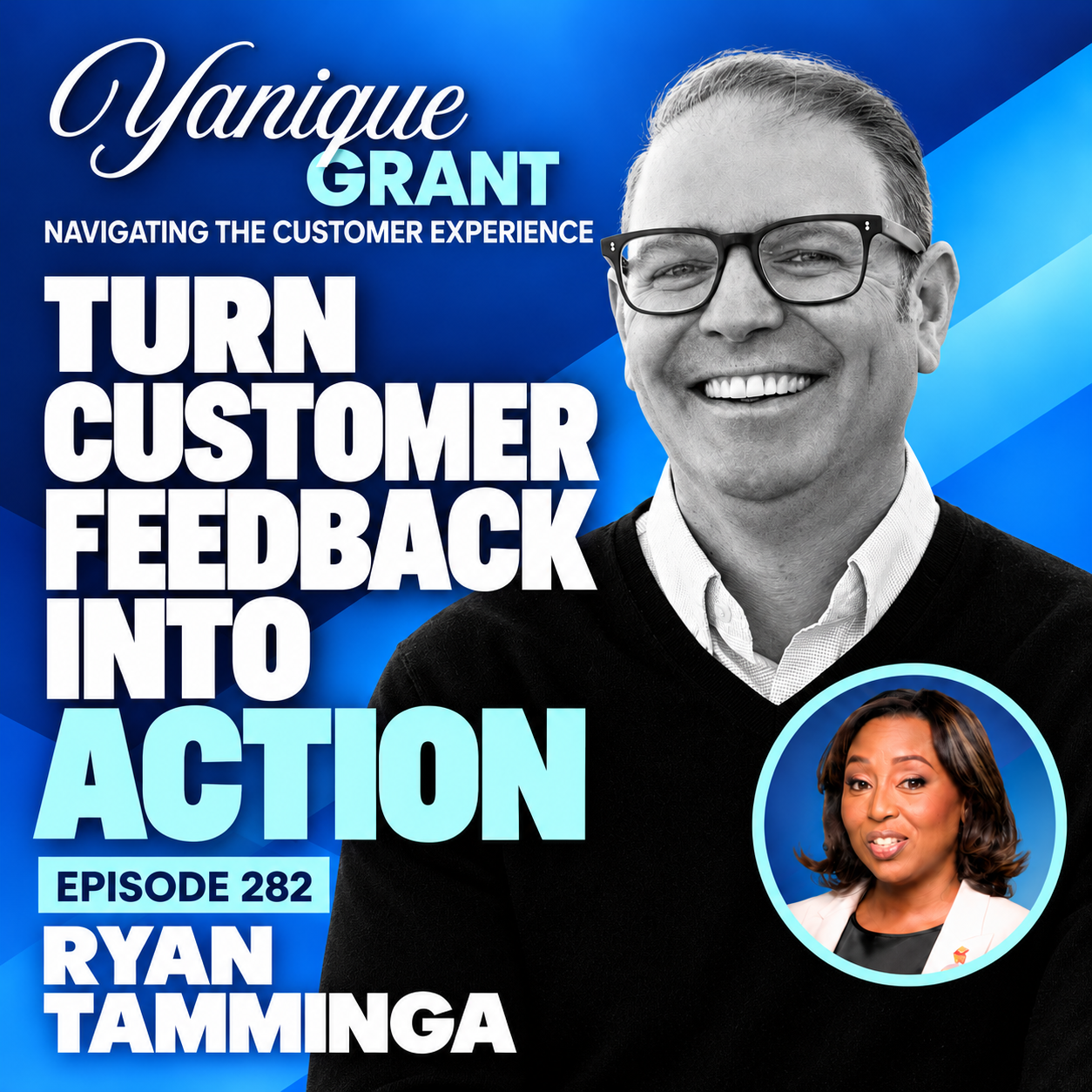
Ryan Tamminga is the Chief Customer Officer at Alchemer, a CX feedback platform that helps organizations listen to their customers through surveys, ratings, reviews, listings and social media, and then put that feedback to work across the business.
Ryan has spent his entire career inside companies improving processes and customer service. Before Alchemer, he was VP of Professional Services at Reed Group, and he led similar teams at the consulting firms Deloitte and Accenture, helping large organizations transform finance, shared services, outsourcing and global business services.
The throughline of his work is designing for the best possible customer experience, with “customer” defined broadly: internal teams, partners and end customers alike. Ryan is a graduate of Santa Clara University.
Questions Yanique Asked
- Can you share your journey and how you got from where you were to where you are today?
- What does Alchemer do?
- Do you get a lot of interesting feedback when you listen across so many channels?
- How do you advise clients to decide what to automate and what to escalate to a live human for a high value conversation?
- How do organizations move past dashboards and sentiment scores toward feedback that actually triggers action?
- What is one simple step any team can take this week to close the loop with their customers?
- What happens when the data says 50% of customers feel a certain way, but the company refuses to accept it?
- What is the one online resource, tool or app you cannot do without?
- What books have had a positive impact on you personally or professionally?
- What is one thing going on in your life right now that you are really excited about?
- Do you have a quote you return to in times of adversity?
Episode Highlights
Defining the Customer with a BigC
Yanique: Can you share your journey and how you got from where you were to where you are today?
Ryan spent much of his career in consulting, helping very large organizations transform how they run finance, shared services, outsourcing and global business services. In every project, the focus was the same: design for the best possible customer experience.
“When we think about the definition of customer, I think of the big C. You could have a customer who’s internal, a through customer, a partner.” That broad view has always pushed him to design solutions that truly serve the people they are meant to help.
When Automation Fails, Feedback Must Reach a Human
Yanique: How do you advise clients to decide what to automate and what to escalate to a live human?
Ryan says it starts with getting feedback data into your operation. CX has evolved from simply surveying customers to understanding, in real time, the channels and moments that matter most.
If a customer says they could not get help and nobody follows up, “that person’s going to be stranded with their feedback.” His advice: wire feedback directly into the systems your frontline teams use, such as a contact centre platform, so a case is created and someone proactively reaches out.
- Micro level: Respond to every individual customer who hits a wall. Reach back out and ask how you can help.
- Macro level: When you see a hundred of the same complaint, fix the underlying process so the problem disappears altogether.
Process improvement “shouldn’t come at the expense of any one customer’s exposure to that challenge.”
Moving Beyond the Dashboard
Yanique: How do organizations move past dashboards and sentiment scores toward feedback that actually triggers action?
Dashboards are great for telling a story to a board, but “it’s not actually the action.” They show what already happened. Today’s technology lets teams go deeper and wider with data, and that clarity should change how they act on it.
Ryan shared the example of Malwarebytes, which believed it had seven customer segments with room to grow. By digging into the analytics beyond the dashboard, it discovered it actually had 15, opening doors it never imagined.
He also noted that most companies already know their three or four big, expensive CX fixes. The real opportunity is looking further down the list at items 10 through 20, combining them, and finding practical improvements you can make every day rather than waiting for one big bang project a year.
Start with Curiosity and One Idea
Yanique: What is one simple step any team can take this week to close the loop with their customers?
For Ryan, everything starts with curiosity. CX professionals should be endlessly curious about what customers, their customers’ customers, and even citizens think.
“Just start with one idea and then go for it.” Pick one thing the data is telling you, explore how to engage the business differently, and let the momentum build week over week, month over month and quarter over quarter.
Leave Your Ego at the Door
Yanique: What happens when the data says half your customers feel a certain way, but the company refuses to accept it?
If you are sceptical of what your NPS survey says, validate it with another channel. Check ratings, review sites and other sources to corroborate the story.
But the deeper shift is mindset. “You can’t really be ego driven and be successful.” Leaders must be willing to accept hard truths, have deeper conversations with customers to understand why they feel that way, and respond from a place of understanding and empathy rather than judgment.
Ryan also looked ahead: as AI agents start acting on behalf of customers, such as booking an entire vacation, businesses will face growing pressure to balance AI driven efficiency with the experience customers actually want.
AI That Evolves the Human Role
Yanique: What is one thing going on in your life right now that you are really excited about?
Alchemer is launching Iris, its new AI native platform that brings all of its products together. Instead of logging in to build a survey, a user might simply ask: “What are the five things my customers are talking about about my french fries today?” and then follow the conversation from there.
That product transformation requires transformation inside the business, too. Ryan’s customer success teams are preparing to meet customers wherever they are on their AI maturity journey. “We really believe in the human support of AI. It doesn’t replace; it actually just evolves what people need.”
Key Takeaways
- Define “customer” broadly. Internal teams, partners and end customers all deserve a well designed experience.
- Feedback without follow up leaves customers stranded. Route it into the systems your frontline teams already use.
- Fix the individual customer’s problem first, then fix the process when you see the pattern.
- Dashboards tell the story, but they are not the action. Go deeper into the data to find new opportunities.
- Look beyond your top three or four known issues. Combining smaller items 10 through 20 can deliver everyday wins.
- Curiosity is the starting point for closing the loop. Start with one idea and let momentum build.
- When you doubt the data, validate it with another channel, but do not let ego override what customers are telling you.
- As AI agents begin acting for customers, businesses must balance efficiency gains with the experience customers expect.
- AI does not replace people; it evolves what people need from your teams.
Timestamped Topics
00:00 Show intro
00:18 Welcome and introducing Ryan Tamminga, Chief Customer Officer at Alchemer
01:08 Ryan’s journey and defining the customer with a “big C”
02:07 What Alchemer does
02:38 The interesting feedback that comes from listening across many channels
03:57 Deciding what to automate and what to escalate to a live human
06:23 Moving beyond dashboards and sentiment scores to action
07:29 Malwarebytes discovers 15 customer segments instead of 7
08:39 Looking past your top three issues to items 10 through 20
09:42 One simple step to close the loop: start with curiosity
10:48 What to do when the company disagrees with the data
12:10 Why you cannot be ego driven and succeed in CX
13:42 When your customer becomes an AI agent
15:10 Ryan’s must have tools: Alchemer, Claude and MCP connections
16:28 Books: John Steinbeck and the power of storytelling
17:55 What Ryan is excited about: the launch of Iris, Alchemer’s AI native platform
19:51 Yanique imagines AI powered, personalized restaurant orders
22:16 How to connect with Ryan
23:25 Ryan’s guiding quote: “If you can dream it, you can do it.”
24:28 Closing reflections on imagination and curiosity
25:38 Follow Navigating the Customer Experience on X and Facebook
25:52 Outro
Featured Resources
Books Mentioned
- The works of John Steinbeck (Ryan is reading his entire anthology to sharpen his storytelling and narration)
Tools and Platforms
- Alchemer (Ryan uses his own platform daily to stay close to customers)
- Claude with MCP connections into Salesforce and Gong
- Iris, Alchemer’s new AI native CX platform
Connect with Ryan Tamminga
- LinkedIn: Ryan Tamminga
- Website: alchemer.com (use the Contact Us page and it will find its way to Ryan)
- Alchemer customers: mention you heard Ryan on this podcast in any Alchemer survey and it will reach him
Ryan’s Guiding Quote
“If you can dream it, you can do it.” (Walt Disney). Ryan is a big fan of Walt Disney and how grounded the Disney company remains in his beliefs. When he feels stuck in the mud, he takes a step back, takes a deep breath, smiles a little, thinks big, and works his way around the problem, because there is always a solution.
About Navigating the Customer Experience
A globally recognized podcast hosted by Yanique Grant, featuring leaders and innovators sharing insights on leadership, business growth, customer experience, and exceptional service delivery.
Follow Us
- X (Twitter): @NavigatingCX
- Facebook: Navigating the Customer Experience Community
- LinkedIn: Yanique Grant
- Website: yaniquegrant.com