Guest Bio
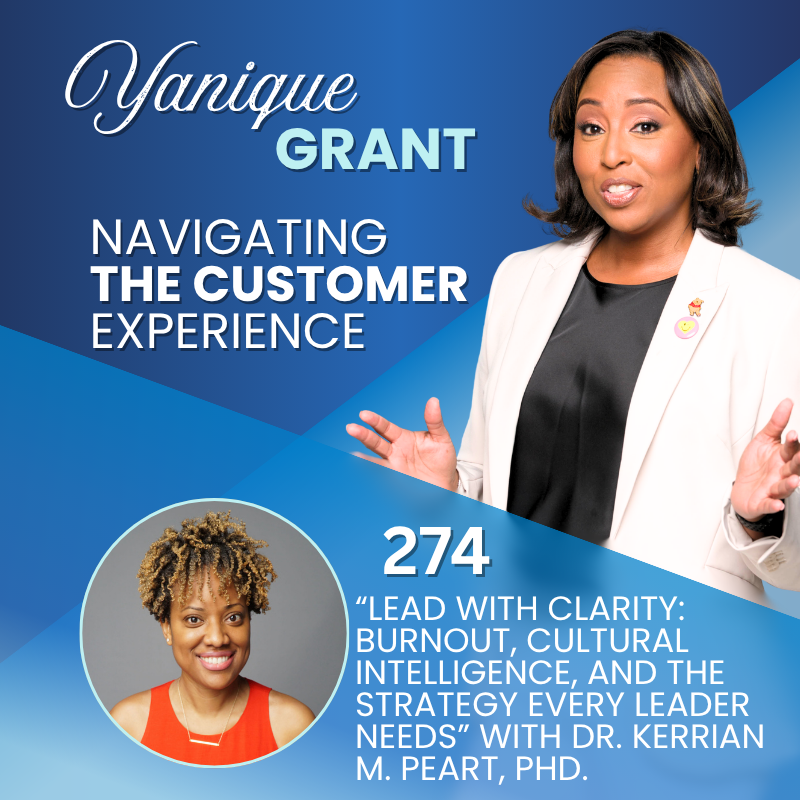
Dr. Kerriann M. Peart is a trusted voice on leadership, burnout, and professional well-being, particularly among women navigating complex organizational systems. With a background spanning organizational psychology, public health, and executive coaching, she brings both academic rigor and lived leadership experience to every stage she graces.
Her work challenges traditional notions of high performance that prioritize output at the expense of people. Instead, Dr. Peart equips leaders with the insight and tools required to lead with clarity, cultural awareness, and emotional intelligence in environments shaped by constant change, pressure, and uncertainty.
Known for her grounded presence and incisive perspective, Dr. Peart works with executives, managers, and professional women across the Caribbean and the diaspora. She is also the founder of Island Rooted Co., a coaching space dedicated to Caribbean women navigating their leadership and professional journeys.
Questions Yanique Asked
- In your own words, could you share a little about your journey and how you got from where you were to where you are today?
- How does a burned-out leader on the inside actually show up to customers on the outside?
- There’s a saying that happy employees create happy customers. From your work in organizational psychology, what is the real evidence behind that connection and what should leaders be doing about it?
- How does cultural awareness shape the way leaders should be managing their teams and how businesses should be serving diverse customer bases?
- What are two best practices that you believe a leader needs to embrace to develop greater cultural competency?
- What is the one online resource, tool, website, or application that you absolutely cannot live without in your business?
- Can you share one or two books that have had a profound positive impact on you, professionally or personally?
- For listeners who feel like they are constantly running on empty but still feel responsible for delivering a great customer experience, what is the one shift in mindset or practice that could change everything?
- Is there anything going on in your life right now that you are really excited about?
- Do you have a quote or saying that keeps you on track during times of adversity?
- Where can listeners find and connect with you online?
Episode Highlights
From Jamaica to Corporate America and Back: The Journey That Built the Work
Yanique: Tell us about your journey from where you were to where you are today.
Dr. Peart’s story is rooted in lived experience. Born in Jamaica and later sent abroad as a “global citizen” by her parents, she spent over 20 years building her career and consulting practice in the United States. Her path through corporate America as a Caribbean woman and woman of color became the foundation for the work she now does.
That work is deeply personal. Three cycles of burnout, her own health challenges, the loss of her mother to overwork and overextension, and watching her father’s struggles all shaped her understanding of what unsustainable leadership costs. She returned to the Caribbean and now brings that clarity to leaders across the region and diaspora.
| “All of that has informed where I am today. That’s why I do the work I do in the way I do it.” — Dr. Kerriann M. Peart |
How a Burned-Out Leader Shows Up to Customers
Yanique: How does a burned-out leader on the inside actually show up to customers on the outside?
Dr. Peart identified three distinct patterns she has observed in burned-out leaders facing customers and their teams:
- The Masked Leader: Pleasant on the surface, appearing to have it all together, maintaining the organizational brand even while internally struggling. This is the most common presentation, particularly for leaders who see themselves as the face of the business.
- The Depleted Leader: Visibly worn, agitated, and conveying the energy of someone who is done. Customers feel like an imposition. This leader has gone beyond their capacity to hold the smile.
- The Vulnerable Middle: The rarest presentation, where the leader shows up with honesty, acknowledging they are not at their best, but still moving toward serving. This is the leader who bridges their own reality with genuine care for the customer.
| “Your brand has to be the extension of the organization’s brand. But when you’ve gone beyond your capacity, customers feel it.” — Dr. Kerriann M. Peart |
Happy Employees, Happy Customers: The Real Evidence
Yanique: From your work in organizational psychology, what is the real evidence behind that connection?
Dr. Peart reframes the idea of a “happy employee” with precision. For her, happiness in the workplace is defined by two things: competence and capacity.
- Competence: Employees who feel skilled, growing in their mastery, and fluent in the work they do.
- Capacity: Employees who are not stretched thin, under-resourced, or overworked.
When both exist together, employees feel empowered. They bring a positive rapport with leadership and colleagues into every customer interaction. That internal fortification is what allows them to extend grace to a frustrated or ill-informed customer, absorb the friction, and still deliver a quality experience.
The message for leaders: if you want customers to feel well-served, look at what you are doing to protect the competence and capacity of the people serving them.
Cultural Awareness as a Leadership Imperative in the Caribbean
Yanique: How does cultural awareness shape how leaders should be managing their teams and serving diverse customer bases?
Dr. Peart spoke directly to a pattern she has observed since returning to the Caribbean: the anchored bias of “this is how we’ve always done it,” even when the approach is no longer working. In a region where customers come not just for business but for a cultural experience, that rigidity creates friction.
Her view is that every cross-cultural encounter is an encounter for education. Leaders who resist building cross-cultural competency will find themselves exhausted and resentful. Leaders who embrace it treat leadership like a sport, iterating and improving their game with every new interaction.
| “Leadership is a sport. Every time you are on the field, you are improving your game.” — Dr. Kerriann M. Peart |
Two Practices That Build Cultural Leadership: Agile Mindset and Humility
Yanique: What are two best practices leaders need to embrace to develop this kind of cultural competency?
Dr. Peart offered two practices that she believes separate leaders who sustain their roles from those who do not:
- An Agile Mindset: Not just a growth mindset but one that can flex in real time, absorbing the nuances of cultural encounters without rigidity. Agility allows leaders to observe, adjust, and learn from each interaction rather than forcing every interaction into a familiar frame.
- Humility: The humble leader does not just stay out front demanding that others follow. They walk alongside their teams and customers. They listen to how the brand is actually being received. They stay curious about what keeps customers returning. Dr. Peart’s observation is clear: humble leaders go further and sustain their positions longer.
| “They learn a lot from walking their employees’ walk and listening to the experiences of customers. Those moments of humility carry leaders much further.” — Dr. Kerriann M. Peart |
The One Shift for Leaders Running on Empty
Yanique: What is the one mindset shift that could change everything for someone who is constantly running on empty but still responsible for delivering a great experience?
Dr. Peart’s answer was direct: get a strategy. Not just a strategy for customers, but a personal strategy for your own fulfillment and satisfaction in the work.
She pushes back on the culture of yes in customer experience roles, where the standard is to always be polished, packaged, and pleasing. Her position is that when you are personally fulfilled and grounded, the quality of what you produce for others is almost automatic. And when a customer is genuinely difficult or rude, having a personal standard and strategy is what keeps you whole enough to still deliver.
Everything starts with you. Your standard first. Then the experience for others follows.
Key Takeaways
- Burnout does not stay invisible. It shows up in how leaders engage with customers, either as a mask, as visible depletion, or in rare cases, as honest vulnerability.
- Happy employees are defined by competence and capacity. Both must be present for employees to extend grace to customers consistently.
- Cultural awareness is not optional in the Caribbean. Every cross-cultural encounter is an opportunity for education, and leaders who build that competency lead more sustainably.
- An agile mindset goes beyond growth. It allows leaders to flex in real time through the nuances of each interaction rather than defaulting to what’s familiar.
- Humble leaders last longer. They walk alongside their teams, listen to customer experience firsthand, and stay open to what the brand actually feels like from the outside.
- Customer experience professionals need a personal strategy. Fulfillment is not a luxury. It is the foundation for consistently excellent delivery.
- Not all customers are right, but your standard keeps you safe. A grounded personal standard allows you to navigate even difficult customer interactions without losing yourself.
- The storm is always coming, so build for it. Strategy, humility, and cultural agility are not reactive tools. They are what you build before the pressure arrives.
Timestamped Topics
| Timestamp | Topic |
| 00:00 | Introduction and Guest Bio |
| 01:51 | Dr. Peart’s Journey: From Jamaica to Corporate America and Back |
| 03:55 | Three Cycles of Burnout and the Cost of Overextension |
| 04:06 | How a Burned-Out Leader Shows Up to Customers |
| 04:57 | The Masked Leader, the Depleted Leader, and the Vulnerable Middle |
| 07:34 | Happy Employees, Happy Customers: Competence and Capacity |
| 09:28 | Cultural Awareness as a Leadership Imperative in the Caribbean |
| 11:48 | Leadership Is a Sport: Iterating Your Cultural Competency |
| 13:36 | Agile Mindset and Humility: Two Practices That Sustain Leaders |
| 16:27 | Google Calendar, Color Coding, and the Recovering Type-A Leader |
| 18:04 | Book Recommendations: The Prophet, The 48 Laws of Power, The Power of Now |
| 20:26 | The One Mindset Shift for Leaders Running on Empty |
| 23:16 | Island Rooted Co.: Pouring Into Caribbean Women Leaders |
| 22:26 | How To Connect with Dr. Peart Online |
| 26:15 | Dr. Peart’s Guiding Quote: The Storm Is Always Coming |
Featured Resources
Books Mentioned
- The Prophet by Kahlil Gibran
- The 48 Laws of Power by Robert Greene
- The Power of Now by Eckhart Tolle
Tools and Platforms
- Google Calendar (Dr. Peart’s go-to for organization, task separation, and color-coded scheduling)
Dr. Peart’s Venture
- Island Rooted Co. A coaching space for Caribbean women navigating leadership and professional transitions at every career stage
Connect with Dr. Peart
- LinkedIn: Search Kerrian M. Peart, PHD on LinkedIn
- Website: peartconsulting.org
- Dr. Peart responds to all messages and welcomes direct connection for coaching, speaking, and consulting inquiries.
Dr. Peart’s Guiding Quote
| “The storm is always coming, so build for it.” — Dr. Kerriann M. Peart |
This is Dr. Peart’s personal brand quote and the philosophy behind everything she teaches. There is always a change event on the horizon. Leaders who build their strategy, cultural agility, and personal standard before the storm hits are the ones who sustain their teams, their organizations, and themselves.
About Navigating the Customer Experience
A globally recognized podcast hosted by Yanique Grant, featuring leaders and innovators sharing insights on leadership, business growth, customer experience, and exceptional service delivery.
Follow Us
- X (Twitter): @NavigatingCX
- Facebook: Navigating the Customer Experience Community
- LinkedIn: Yanique Grant
Website: yaniquegrant.com