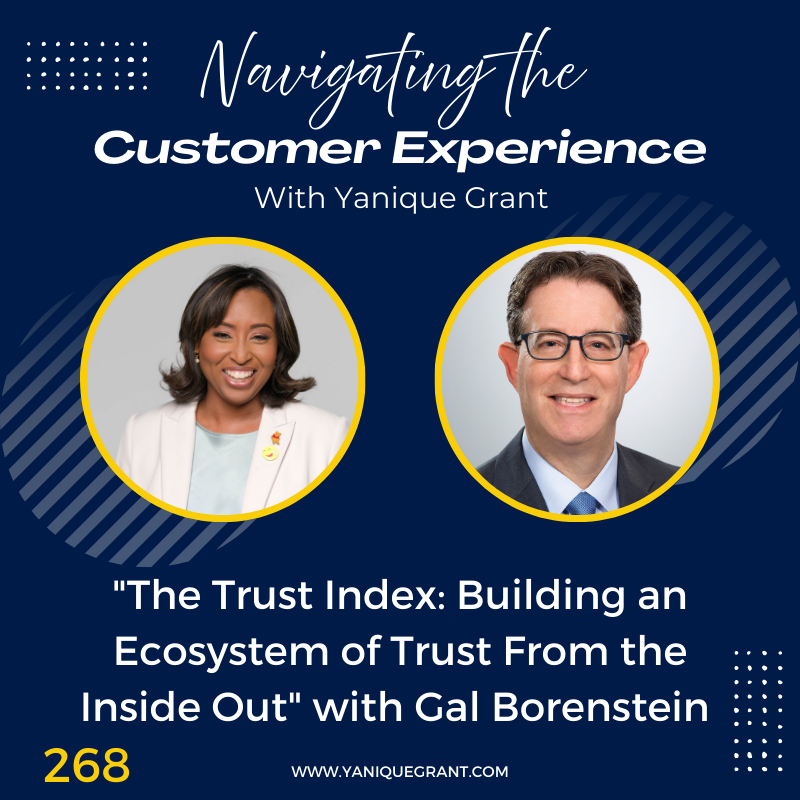
Gal Borenstein is the Founder and CEO of The Borenstein Group, a branding, marketing, and public relations firm that works with growth-oriented organizations operating in complex and regulated environments. With nearly 30 years of experience, he advises executives on positioning, credibility, and go-to-market strategy, particularly when trust, reputation, and differentiation matter most. He is also the author of multiple business books focused on leadership, strategy, and decision-making in the digital and AI era.
Questions
- Could you share your journey and how you got to where you are today?
- What’s the biggest factor driving the breakdown of trust between brands and customers in the digital and AI age?
- What common CX trust mistakes are brands making in the age of fake reviews and AI-generated content?
- Could you also share with our audience what’s the one online resource, tool, website or application that you absolutely can’t live without in your business?
- Can you share with our listeners, if there is one thing that you’re working on right now in your life, could be personal or professional that you’re really excited about, either something you’re working on to develop yourself or your people.
- Where can listeners find you online?
- Now, before we close our interviews off, we always like to ask our guests, do you have a quote or saying that during times of adversity or challenge, you’ll tend to revert to this quote if for any reason you get derailed or you get off track, the quote kind of helps to get you on track.
Highlights
Gal’s Journey
Me: Now, we’d like to always ask our guests if you could, in your own words, just share a little bit about your journey, how you got from where you were to where you are today.
Gal shared that it’s the story of an American immigration. He was born and raised in Israel. He did his active-duty service, which you don’t have a choice, but everybody goes. And a day after he finished his military service, he knew that he wanted to be a journalist, because that’s what he did in the military, he was a military journalist. So, low and behold, the country that produces a lot of news, whether you like it or not, did not have a degree, a bachelor’s degree in communications, so his dad came to him and said, he saved all his life for one semester, so he can go and learn English. And that basically started the American immigration story.
He was 21 and he was very anxious to get ahead in life without having any money or having rich uncles or banks or venture capitalists. So, he really kind of took college as a thing that he has to get through, and the result was that finished his undergrad in two and a half years from Temple University. And then he finished his master’s degree, which was kind of a techno MBA at George Mason University in Fairfax, Virginia, which was the first one to offer an understanding of technologies along with business.
And then, basically he worked for 1 year for a telecommunication company that was a $20 million in size. And very quickly he became kind of the kind of pet, if you will, pet employee of the 2 owners of the companies that were engineers. And what he found is that they’re very, very smart and all the engineers that are working there, but they didn’t know how to express themselves when it came to marketing and external communications.
So, what he hatched at that moment was the idea that, what if there are other companies, like the one that he was working for that have the same problem, technology companies, engineers, technical people, complex business. How did they communicate their brand to the outside?
So, he took a $2,000 loan on an extended visa cheque, which they send, sometimes to people not knowing that on the back of it, in very, very small letter, it says, when you cash it, it’s $500 in addition to, like, 30% interest. Well, he didn’t know that, but that was kind of the funding that allowed him to get a marketing brochure, a business card, a nice shirt and a suit. And he basically took that and called it The Borenstein Group, being located in the Washington, DC area.
It allowed them to be very fortuitous in the sense that they had a chance to work with a lot of technology companies that are working on stuff for the government, and being that the government is the number one buyer of anything in technology, and when it comes to cybersecurity, advanced analytics, AI, you name it….they’re basically ahead of most commercial economy. So, Washington, DC has become kind of like a little hub of what Silicon Valley is, but for more software application, software service.
Fast forward, really, he’s been doing this for 30 years under The Borenstein Group flag, and not a lot changed in the sense that people that are in technology positions or engineers need help connecting the dots between what it is that they’re selling and how to sell it internally to their employees and to the stakeholders on the outside, which could be the buyers. And their specialty is really kind of helping business to business companies, because unlike a consumer product, where all you have to do is to be creative with your idea, right, just to kind of present it, have a funny song to go with it, and then price it correctly, so it’s an impulse buy. It’s very different in B2B, because in B2B, you’re selling, for example, Microsoft, licenses to a company that has 10,000 people or 50,000 people. Well, you can imagine that there is a decision maker that is kind of the program director in charge, or the CIO, but then you have also a Chief Financial Officer that says, “Why are we spending that money?” And they need to know why.
And then the third is the CEO of the company, and they ask the same question, “Why should I switch that technology?” And imagine what’s going on now with AI, how fast this was becoming a problem and a solution in many organizations. So, overall, he got to work, and was very fortunate to work with CEOs of small to mid-sized companies, and kind of see the struggles that they have, not only externally with marketing and branding and PR, but also the issues that they’re dealing with inside the organization, which most people may refer to as the customer experience or customer service, but in reality, they’re all connected to each other through a thread, and that’s why he wrote one of his books, and this is kind of one of the latest books, is Don’t Believe The Hype When Trust Is On The Line In The Age Of Digital And AI.
The Breakdown of Trust Between Brands and Customers in the Digital and AI Age
Me: So, I’m glad that you kind of dovetailed into that, because that actually leads me into my next question about your book that you just wrote. So, you mentioned you wrote this new book is called, Don’t Believe The Hype When Trust Is On The Line In The Age Of Digital And AI. And of course, this podcast is all about customer experience. So, my first question to you is your book opens with the idea that trust has become a fragile currency in the digital and AI age, right? So, from a customer experience lens, what do you believe has caused the biggest breakdown in trust between brands and customers today?
Gal shared that he thinks that the biggest issue, which is he kind of title it, the erosion of trust has really kind of happened when the idea of automation and digital transformation has kind of been incorporated into companies. Let’s say Amazon is a bigger example, but you have a lot of smaller companies, and what has happened is there used to be a human-to-human trust factor involved. For example, called customer service, there was somebody there that took your call. The idea was, you don’t make them wait 10 or 20 minutes, and then you follow up with them, because sometimes they have a situation that needs to be resolved, just being in the ice storm that they have right now in Washington, DC at least, they can’t get out of the house. So, if you needed an HVAC technician to come, you would call customer service, and depending on who you get, you might be on hold for 20 minutes, or you might get somebody that say, “Hey, I know where you live. We have a truck there and we’ll deliver service.”
But the erosion of trust is really kind of overwhelming, because before COVID, we had many human oriented communication tools that allow trust to be built. So, if you basically knew that the company that you work with or within the company that you work with had a kind of strong ethos of values that have to happen on the outside. For example, they always want to be the fastest or the most accurate and deliver everything in one to two days if they need to, if it’s like sticking with the Amazon example, that’s really kind of what built the trust with customers.
But now add new technologies, especially post COVID, people are not making any phone calls anymore. Your iPhone essentially is a computer that is used for texting more than anything else and taking emojis and doing all the cute thing that we do, but the one thing that it isn’t, human conversations have always subsided into only emergency call. So, the phone used to be a place where you could touch and feel, if you will, the human psyche, and as soon as smartphones came to the market and now AI, what it created is a new generation of customer service representatives that are working from scripts to a point that is just not believable. And the reason that it’s unbelievable and create kind of that mistrust, if you will, or distrust, it really is a function of being led by a process that doesn’t have a heart.
And what he always kind of advised his clients, and as he mentioned in the book, is to really start by looking on the inside and determine whether you believe that the customer is providing great customer experience. And if you can’t identify what are the weaknesses that you have, and you just rely on more technology. Like few years ago, it was all about CRM and now CRM is being integrated to AI. AI doesn’t have feelings, AI is doing what you’re asking to do just faster, but they’re not going to stop and tell you that you’re doing it wrong. So, he thinks at the at the end of the day, the erosion of trust internally, externally and by consumers as well, is all related to the breakdown between what humans do and what automation is supposed to be.
Common CX Trust Mistakes in the Age of Fake Reviews and AI-Generated Content
Me: Now, in addition to that, you highlight in your book that fake reviews, and this is something that I holistically believe sometimes, when I’m reading these reviews, that they’re just not real, a real person didn’t write them. Misinformation and AI generated content are actively eroding customer confidence. So, from a CX standpoint, what are the most common trust mistakes brands are making without even realizing it?
Gal shared that the biggest one, and it’s something actually that they deal with as part of reputation management for some of their clients, the kind of the age of fake reviews and the age of expressing yourself has dramatically changed. It doesn’t matter if it’s fake or not.
What used to be the case is companies owned the wrong narrative, they had their sales people, they had maybe the best customer experience in the world as well, and customer service representative, but we owned essentially as companies what we want to say about ourselves, in comes social media, in comes Glass Door, in comes Trust Pilot and all these social media based bulletin boards where people can anonymously mismatch, the name of your company, invent things that never happened. And if you’re a competitor, you’re loving life, because your competitor is tarred and feathered, basically with no real evidence.
Of course, a percentage of it is going to be disgruntled employees, disgruntled people that received a bad product or a bad service, but it went from having kind of an article in a while to be in the newspaper or on a website where they’re talking about consumer reviews, that used to be the standard consumer review.
Well, now anyone with an email address, with Gmail address, with a Yahoo address, with the company address, can basically log in and write whatever they want. And the problem is, going back to your question is in most companies, the idea of listening to what people are saying on the outside is very new and very confusing. On one hand, you’re saying, this is fake. I read something, it never happened. Or that employee that says that they didn’t get their benefit, that never happened.
But what companies do is they kind of on react mode, and they don’t really take the time to understand that social listening to all these different media out there is really part of your game now. So, you used to own the narrative, and you could swash that stuff. Now you can’t anymore.
So, you have a responsibility to your own company, and if you want to succeed in the external narrative and make sure that it matches what your promises to the marketplace, you really have to pay close attention to it. And once you kind of listen to the main channels where people are active, it doesn’t have to be all of them, it could be the ones that are related to your industry. And then what you need to do, you need to integrate it back as a feedback loop to the organizations within your company. It could be a small company, it could be a bigger company, but imagine that we have HR, we have the financial management, the CFO, we have the CIO, we have a CEO, we have a chief operating officer. And imagine that all these things are going on, and the CEO one day just Googles the data of the company, their own company, and they are just completely disturbed when suddenly they see that Google index complaints that he or she investigated, and none of them are real. And then they try to call Google, and Google does not answer, because Google does not exist in order to satisfy one person, it’s basically a conglomerate of information that is being kind of vacuumed into a vortex where you can get lucky and index it on page two, which, by the way, 99% of the people never get to.
But if you’re not proactive about it, if you’re not communicating what’s true and what’s not, if you’re not creating content that help people understand that your company is better than the other company, or that your product is more reliable or the service is more responsive, all the promises that we used to make in that narrative, internal narrative becomes obsolete and non-believable.
So, it’s really important not to just talk about the fake reviews, but to think about the idea that in every company, there needs to be an eco-system of trust between the executive management and the middle management and the factory worker or the customer service representatives that all believe in the same values. And he can tell you from experience that does not exist unless you’re examples of Amazon or FedEx or UPS that have very high standards and they want to know how to improve themselves. Most companies just shrug it off and say, “Well, I can’t do anything about it.”
And that basically takes away the resilience of the brand that you build. And instead of basically moving forward and taking the latest innovation that you have, the latest idea, instead, you’re spending your time responding and defending something that cannot be defended because you’re talking to an anonymous individual or entity, and you can’t even sue them because there’s no person. And guess what? The social review sites don’t give you that information if you’re a company, they say it’s freedom of speech, whatever they claim, would mean that you’ll have to basically communicate new content that they will very happy to accept. But it’s very different than having a proactive strategy.
So, if there’s one thing that he emphasizes to all his clients, which is kind of also the focus of don’t believe the hype, is build an eco-system of trust within your company where your values are consistent across the board, not just in the management room, but also with the customer service representatives, so they know what is the message that needs to come out and measure themselves, not only how many calls did you make today or how many emails that you respond to today, or how satisfied is a customer, but also look at the things that can change to make you move a lot faster with velocity of winning.
Me: So, that’s basically the mindset shift that the CX leader would need to make within the organization to get to that. And that’s kind of what your book is trying to bring across.
Gal agreed, yes, it’s not a top-down operation, it’s a bottom-up operation with the support of the C suite in organizations. And that’s really kind of where the disconnect is. Everybody wants to do well for their company, but they don’t talk to each other as humans with a system in place that can create a benchmark. One of the things that he talks about in the book is, do you have a trust index? Do you have an ability to say, here are the five things that we suck at, and here are the five things that we’re great at. And now let’s measure what we’re doing in each part of the company and bring it together and sit down and say, why is it that we thought it was 3 and other people thought it was a 10?
And there’s an interesting statistic that he wanted to share, which is a very recent from a research institute that says even employees and management, the study shows that 90% to 93% of management thinks that employees believe what they say, and conversely, 83% of employees basically don’t believe what their managers are saying. So, the result is basically a parallel universe where, unless you are wildly successful because you’re Apple and you have the only iPad, the only iPhone or the only feature that changes the world, like AI, there’s a complete disconnect.
And that’s really kind of what people need to pay attention to, because at the end of the day, customer service, customer experience, is starting from within the company, not outside the company. By the time it gets outside the company, and there’s what we call the post-sale follow up, it needs to have all the ammo to make sure that we can make the experience better for somebody who may not have understood how to use the iPhone 17 that came out, it looks the same, like the 16 or the 15, they say that it have great features, but nobody can figure it out if you’re over 40. So, the question is, is there somebody waiting for the over 40 crowd to actually explain to them how it works or is there just a video that is 5 seconds to 30 seconds, which we call YouTube shorts, where they give you all the information, which is only something that millennials and Gen Z might actually consume. So, here’s a real-life example.
App, Website or Tool that Gal Absolutely Can’t Live Without in His Business
When asked about an online resource, Gal shared that the best resource that he always uses is LinkedIn, actually, because LinkedIn, while it started as kind of a job post online, it created a community of managers in every possible scenario, it could be a group of doctors that want to communicate about best practices. It could be a group of technologists, they’re just specializing in cybersecurity, for example, and the ability to source people from all over the world and in your area or in the country and ask a question and get 200 responses for people who say you’re wrong, you’re right, here’s another resource you can use. Has accelerated the trust that needed to be built when people are all over the place, and especially now that the new generation of work model. This is not involved anymore, just going to the office every day, which this is where you meet that cadre of experts, it could be your manager, it could be a supervisor.
LinkedIn, it allows you to actually sign up for free, look at where the knowledge exists. There are groups that you can join, and then there are individuals that you can connect with, and you’re not selling anything, and you’re not asking them for a job. If you do that, that’s a different game. But the knowledge exists there because people are publishing their own papers, and they want an audience, and the audience is there, especially if you’re interested, for example, in advanced analytics and cyber security, or in how to be a better customer service representative. So, it really applies to everyone.
LinkedIn has a very good editorial staff as well. They make sure that junk doesn’t stay more than a few hours if somebody basically wrote something that is completely inappropriate or not relevant, and they’re the closest to what the Washington Post and New York Times used to be for news as it relate to credibility and longevity of whatever the facts are. So, he looks at that first.
The second, obviously, is with the advent of AI, using OpenAI, ChatGPT, Google, Gemini, Perplexity, Claude, which are all basically informed search engines, now it’s a lot faster to find out. For example, “Let me know who my competitors are in a company that has 15 to 50 employees, for example, tell me what they’re doing right now and what products they have.” This used to take months to get research. Now, you can get information, and then you can criticize that information or critique it and say, “Well, that looks like real and that looks like it doesn’t belong there.” What he always tells people is, trust, but verify, and information is a lot quicker to get. It doesn’t mean that it’s right, because one of the funniest thing that works almost one to one when he does research, and he loves having AI as an enabler to get stuff done faster, but it’s almost one to one where he goes back to ChatGPT that gave him an answer on market research, or a competitive market research, and they listed a bunch of people, and then he goes back and ask the question, “Can you verify that what you just responded to are correct numbers, are correct facts, and the companies that you mentioned exist, and provide me a URL or www domain name that I can check.” And low and behold, ChatGPT is smart enough to say, “I apologize. Let me do it again.” And then it comes back and says, “Yes, that it’s a verified source, but I made up the other five.” which is called AI hallucinations. So, all of the things that he just mentioned, if you use them wisely and you have intentional kind of use of those resources, which are great, then you can really, kind of skip the line of going kind of in a very kind of a turtle like rhythm, and really kind of go into an informed executive that can really make a difference.
What Gal is Really Excited About Now!
When asked about something he’s excited about, Gal shared that the one that comes to mind that he kind of he’s in the process of creating is taking what he wrote in the book, which was that ecosystem of trust, and bringing them into existing clients and new clients, and basically helping them understand that trust in the digital age is not the same like analog trust, where people used to sit together, go to lunch and do all these things, and each company has to develop its own values, or take its values and adapt it so it works with social media, with digital and with AI. And knowing and explaining to them that they have to own their narrative.
So, building those things through companies requires a system, which he created, but now taking it to the level of one-to-one interaction with executives, middle management, surveying employees. All these things take time, but he’s very excited about it and passionate about it, because he never thought, kind of growing up, that trust was that important, other than trust me, or what we call a transactional trust, which is two people agreeing to do something for specific goal, and you trust them to give you the right credit card.
But now we have a new world where there’s so much fake news, if you will, out there. Your job as a manager, as an executive, as a customer service organization, which in fact, all service organizations are customer service organizations when you think about it and working with them, he finds every time something that was kind of a blind spot that they had not because they didn’t mean to do it. It’s because that blind spot was never looked at as a kind of a monetized part of the company. And that’s kind of connecting the dots between monetizing trust and at the end of the day, making the company better is something that he’s very passionate about.
And that’s why giving the opportunity to kind of talk about it and then having people look and kind of heckle, heckle him in presentations sometimes and say, “Ah, this is not going to work. This is never going to work.” His response is, “Well, if you don’t want it to work, it will never work.” But then to see the rest of people have completely different attitude because they know that with AI, you might be replaced, you might be displaced if you don’t know what to do with it. And that’s an opportunity for them to talk about how you can integrate those tools into that ecosystem that we talked about.
Connect with Gal Online
LinkedIn – Gal Borenstein
Website – www.borensteingroup.com
And to the listeners of the show, dedicating 10 copies of his book. So, if they reach out to him and connect, the first 10 listeners that connected, is going to get a book that talks about all these things and give them an opportunity to really kind of understand it.
Quote or Saying that During Times of Adversity Gal Uses
When asked about a quote that he tends to revert to, Gal shared that it may be amusing to some people, but it’s very serious. There used to be an episode on Seinfeld which was kind of a very humorous show, but it had a lot of wisdom in it that people might have missed. And there’s kind of this interaction with George Costanza, which is kind of the ultimate kind of loser that can’t get anything done in life. But one of this kind of, the saying that really kind of stuck with him and it proves to be true every day is, it’s basically, “It’s not a lie if you believe it.” Which obviously is morally reprehensive, but it’s the equivalent of visualize what success looks like and make it your own.
Build your narrative, and of course, you have to support it by proof points that what you’re doing is not completely disconnected from reality or you’re being delusional. But throughout kind of his career, he found out that people call it now manifesting. Manifesting before that word was used was, you have to build a vision, and you have to believe in the vision even when it does not exist in real time. And if you have that belief and you’re able to do that, you can inspire your employees, you can inspire your partners, you can get new customers because they see somebody who believes in what they’re doing and that parlays itself into passion.
So, that’s kind of his fallback when somebody basically tells him it can’t be done. And he tells them, believe in it, and it will become something that you can go with. And he found that people that don’t typically remain behind.
Me: Thank you so much, Gal, for taking time out of your very busy schedule, sharing with us about your book, Don’t Believe The Hype. Connecting some of those CX touch points in terms of what organizations should really be focused on, where their mindset shift should be in order to really develop that trust factor, not just with their external customers, but also their internal customers. I found it to be a very valuable conversation, and I’m grateful that you took time to share the information with us today.
Please connect with us on X @navigatingcx and also join our Private Facebook Community – Navigating the Customer Experience.
Links
The ABC’s of a Fantastic Customer Experience
Grab the Freebie on Our Website – TOP 10 Online Business Resources for Small Business Owners
Do you want to pivot your online customer experience and build loyalty – get a copy of “The ABC’s of a Fantastic Customer Experience.”
The ABC’s of a Fantastic Customer Experience provides 26 easy to follow steps and techniques that helps your business to achieve success and build brand loyalty.
This Guide to Limitless, Happy and Loyal Customers will help you to strengthen your service delivery, enhance your knowledge and appreciation of the customer experience and provide tips and practical strategies that you can start implementing immediately!
This book will develop your customer service skills and sharpen your attention to detail when serving others.
Master your customer experience and develop those knock your socks off techniques that will lead to lifetime customers. Your customers will only want to work with your business, and it will be your brand differentiator. It will lead to recruiters to seek you out by providing practical examples on how to deliver a winning customer service experience!