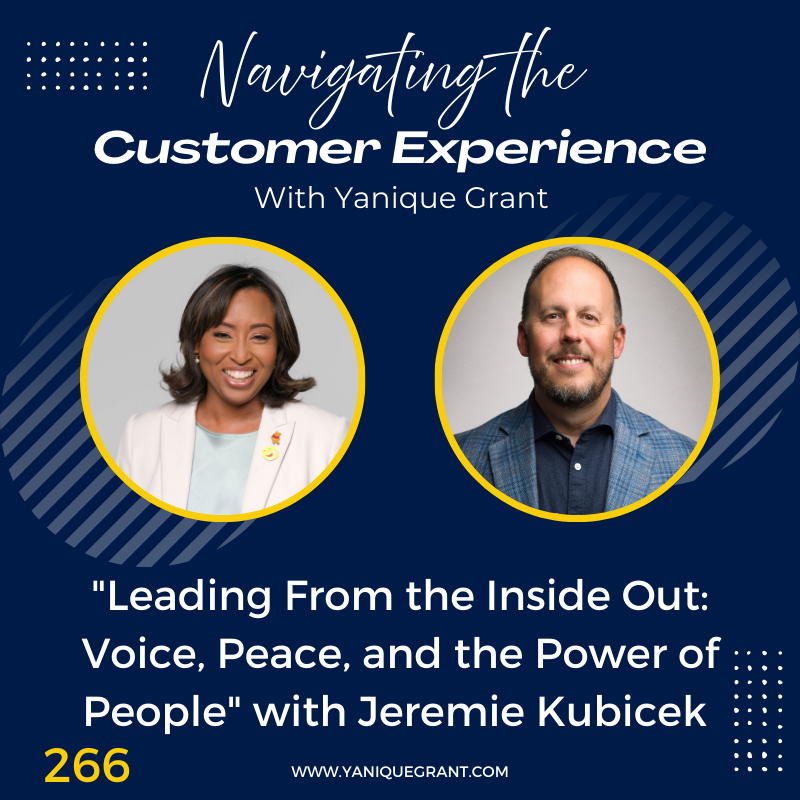
Jeremie Kubicek is a powerful communicator, serial entrepreneur and content builder. He creates content used by some of the largest companies around the globe found in the books he has authored: His brand-new book, releasing October 2025 – The Voice-Driven Leader, as well as his other books like The 100X Leader, 5 Voices, 5 Gears, the National Bestseller – Making Your Leadership Come Alive, and The Peace Index. The Communication Code, co-authored with his business partner, debuted in November 2023 as Amazon’s Top New Release in Business Management. Jeremie is the Co-Founder of GiANT, a company that certifies coaches and consultants that serve companies and their employees. Jeremie has started over 25 companies while living in Oklahoma City, Moscow, Atlanta and London.
Questions
- Can you share a bit about your journey and how you got from where you started to where you are today?
- Can you tell us about your new book, The Voice-Driven Leader—who it’s for and the key message you want readers to take away?
- What two or three core principles from the book would you say are most important for leaders, especially those transitioning from being a peer to leading former colleagues?
- What are you currently most excited about—either in your personal development or in developing your people?
- Now, could you also share with our listeners, what’s the one online resource, tool, website or application that you absolutely can’t live without in your business?
- Now, could you also share with our listeners, maybe one or two books that you’ve read recently, could be even a book that you read a very long time ago, but it had a very good impact, or a positive impact on you. Do you have two of those you could share with us?
- Before we wrap our episodes up, we always like to ask our guests, do you have a quote or saying that during times out of adversity or challenge, you will tend to revert to this quote if for any reason you get derailed or you get off track, the quote kind of helps to get you back on.
- Where can they connect with you or find you online?
Highlights
Jeremie’s Journey
Me: Now, we always like to give our guests an opportunity to share in their own words, a little bit about your journey. So, if you could just take a few minutes and just share with our audience a little bit about how you got from where you were to where you are today.
Jeremie shared that he’s an entrepreneur, and he’s really figured out what the core functions of entrepreneurialism is in business is, the three kinds of broad categories. There’s the business plan, there’s the financial plan, and there’s the people plan. And he’s over the years, spent a lot of time in the financial plan and the business plan, and he always realized the people plan would screw up. People would mess up the business and the financial plan. And so, he started doubling down on people and people development. And he realized that people can be an asset if you understand who they are, what you’re trying and if you can share clearly your expectations for what you want, then they can become thriving individuals. So, he’s just have doubled down his entire career on fighting for the highest possible good of people and helping them become assets and not treated as liabilities.
Overview and Purpose of The Voice-Driven Leader
Me: Now, in your bio, I mentioned that your most recent book that was published in this month, October 2025, yesterday, actually. Oh, wow, I’m talking to you at a good time. The Voice-Driven Leader, could you tell our audience a little bit about that book that you’ve published? Who is it geared towards? What’s the message that you’re trying to get across?
Jeremie shared that the big idea is the most important person inside an organization, is the people who lead people, the person who leads another person, they’re the team leader. And if the team leader is healthy, that team will be healthy. So, they call the team leader the Sherpa, they’re climbing and helping people climb. And so, what the whole book is about is knowing what your voice is, who you are, what your personality and wiring is, and then knowing who you lead.
And the idea is, if you can know who they are and lead them based on who they are, then you’ll be more effective. And then they create their actual roadmap, their employee journey and a development plan, so you basically know who you are, who they are, and where are they on their journey inside the organization. So, it is a system, and it’s very detailed, and so it’s designed for anyone who leads another person. It’s an amazing resource to help them figure out how to actually lead people where they want them to go.
Leadership Principles for New and Emerging Leaders
Me: Now, in the book, are there maybe two or three overarching tenets that the book kind of focuses on, if we have listeners that are tapping into this episode and they’re leaders in their organization, especially if they’re transitioning from being just a regular team member, and now they are in the role of leading a person who, yesterday, that person was just their co-worker, that person and them are on the same level. What would you say are some traits that you would need to embody to transition in that new role?
Jeremie shared that the first one is, literally, he uses the analogy of, like, learning a language. So, if he’s in France, and he’s in Paris, and he orders a cup of coffee, like he’s from Texas or New York, like, “Hey, black coffee, now.” Like, that’s not going to go well. But if he goes, “Bonjour, un café, s’il vous plait.”, if he says it in their language, then it’s going to connect better. So, the first principle is like knowing and understand who’s on the other side of you and how to speak their language, not force them to speak your language. So, that’s one key component.
The second one is truly knowing where are you trying to develop them. What are the expectations, and how do you onboard them, and how do you get them all the way through conscious competent and past this thing called a pit of despair, and the pit of despair is when they’re consciously incompetent, when they realize they don’t know what they’re doing.
How do you actually get them to the place where you want them to go? And that’s really important to know how they’re wired, what their voice is, and if you know that, you can know their stress behavior, you can know what happens to them and keep them out of the pit.
And then the last thing is like actually having a vision for them and building a real development plan for your people. And then you show them what the plan is, and they see the roadmap. It’s almost like a Monopoly board game, “We’re right here, then we’re over here. Now we’re down here, and I want you over here.” But if you can visually show them.
And so, the whole book is a visual experience that shows them the roadmap of the employee journey, and then how to develop them based on who you are and who they are. And then they weave in something they built, it’s called the 5 Voices AI, and they’ve trained AI to literally know who you are and who they are. Like, how do I send this email to them? And it’ll change it based on their personality, and it’ll actually write the email to their personality versus your personality. Or build a development plan based on their personality. So, it’s very powerful.
Me: Communication has really evolved when you look at how people communicate, like 10, 15, years ago, to how they’re communicating now, especially even in the informal written platforms like What’s App or even iMessage, especially the generational communication, like yesterday, I was listening to a video on Instagram, and this lady made a post that she found out that when you give somebody a thumbs up, it’s actually considered passive aggressive to Gen z’s. I didn’t even know that I was like, what?
So, even in the non-verbal, just the emojis, they carry some message that if you don’t really know what it is, you could actually be sending a signal that wasn’t your intention.
What Jeremie is Really Excited About Now!
Me: So, we spoke a little bit about your new book. Now, is there anything that’s going on here in your life right now, Jeremie, that you’re really excited about either something you’re working on to develop yourself or your people?
Jeremie shared that he had the book, but the idea is, he’s been working on this concept of peace is power, and when you’re not at peace, then you don’t have the power. You won’t empower people; you might overpower people. And what he’s noticed is that you have a lot of jargon, a lot of books, and everyone tells people what to do, but at the core of you, internally, if you’re off, then you can’t give what you don’t possess. So, if it’s a customer experience, but you aren’t at peace, you’re not going to give a full customer experience, it’s going to be platitudes, it’s not going to be authentic.
So, he spends a lot of time working on himself every morning. He calls himself up into who he is. He knows his identity. He works on his mindset. He does the things because he’s in the business of helping people come alive. He’s in the business of helping develop people, which means he has to be alive, and if he’s not alive, it just shows up as transaction.
App, Website or Tool that Jeremie Absolutely Can’t Live Without in His Business
When asked about an online resource that he can’t live without in his business, Jeremie shared that outside of, like Slack and really basic things, it’s actually their own tool he uses. He mentioned to you, they have the 5 Voices app, and it’s their operating system, but he uses it every day, with every interaction. It’s basically like their own ChatGPT, but in an app format. So, every single day, he’s literally asking it questions, and he’s working on the dynamics of like, he’s meeting with his son, he did it this morning. His son has a business; he was asking for some help. So, he took the app, he goes up here to his son Will, and he typed in his questions, he’s like, “How do I convey this to my guardian, pioneer son, if I’m a connector?” And it gave him brilliant insights that he would have missed.
And so, the other day, yesterday, he did a tone check. He got this email from a pioneer, and he put it in the 5 Voices AI, and it knows them, and it knew him. And he goes, “How should I read this? Am I reading this wrong? Am I overthinking?” And it was like, “You might be overthinking. There’s nothing here. He was probably rushing.” And it was brilliant as it relates to relational dynamics and interpersonal communication. So, he uses it, again, every single day in his life, which is basically they trained their own GPT, and they made it available to people, but it’s the 5 Voices app is the most helpful thing that he uses daily.
Me: Oh, nice. And that’s available to the general public, right? 5 Voices app.
Jeremie confirmed yes. Just go to the App Store and it’s the 5 Voices.
Books that Have Had a Great Impact on Jeremie
When asked about books that have had a positive impact, Jeremie shared that he actually have been reading Unreasonable Hospitality lately, and it has been really fascinating, because it’s very consistent with what they kind of teach and preach, but the concept is, what he loves about it, what he took away from it, was the idea of journeys, that people are on a journey, and customer experience is a journey.
So, he asked three questions, like, who is the Avatar? Who are we after? What’s their pain, and how can I solve that? How can I make their experience amazing?
And so, he really loved it, because it took him on this track of like, thinking about employee journeys, customer journey. And when he’s a customer at wherever, what journey is he on? Well, he’s hungry and he wants something to eat. Okay, why did he choose this restaurant over that restaurant? Was it the food? Was it the service? Was it the experience? Was it the ambience? What time of day was it? Well, it was fast food, or it was a quick lunch versus a sit down experience versus a date night, right? So, what he loved about it is just, is putting it all together.
Next week, he’s going to be going to Cinnamon Shore. It’s this really cool, he doesn’t know how to describe it, community in Texas, on the in-Port Aransas, Texas, and it’s 500 houses, beach houses, all in this beach. But they have created this, like experiential resort, and when you come in, it’s like, it just feels so good. But they’re asking him to help them go to the next level. So, he’s weaving in employee journeys, employee development, with the customer experience. So, he’s using Unreasonable Hospitality on the customer side, but he’s using his work on the employee side, and he’s putting them together. And the idea is, if the team leader isn’t at peace, then they’ll have a hard time implementing the true experience. So, the analogy he uses is the fountain, and he goes, what do fountains do? Well, they spray water, its ambiance, they flow. So, why do people come to a fountain? They come for ambiance, for refreshment, for the sound. Okay, great. But what if the water’s brown, or what if it’s not working? People walk around it; it’s a waste of space. And the message is, yes, be a good fountain. Your job is to be a good fountain.
So, if you’re not overflowing, and if you’re not at peace, you won’t overflow. There’s no water that comes out. There’s no power, and so then you have to take all that power to work on the fountain, it’s broken. So, the idea in customer experiences is actually that the employee experience, the employee and the team leader in particular, they have to be alive or they’re not going to overflow. You can do all these strategies on customer experience, but if you don’t have good team leaders, they could rob that experience. They could take away from the very business plan that you put in place. Does that make sense?
Me: Yes, it does. And one of the things that came to mind when you’re speaking just now is, it all starts with, as you said, the team leader. But even outside of, if you strip that title away from the person, anyone that’s doing a job, it starts with them, individually. That’s what I got from what you said. If you don’t fix you, it starts with you, then everything you do will be impacted by what’s going on within you. So, if you’re in turmoil, if you’re having a lot of confusion or anxiety within yourself, it manifests in different ways, through your body language, through your tone, just through how you answer people.
Jeremie agreed, it’s a vibe, what vibe is coming off of you, right? And because we all have been in that place with that barista, or that service person who’s just there, they’re in their head, they’re mad, there’s something that happened, “What? Here. Okay” and that transaction, that one person, actually affected that brand that day, which is so hard. So, then the managers, the Sherpa, they’re the ones who can call that person up and like, “Hey, come on, Tiffany, let’s go.” And like, call them up, but it is to your point. It is a personal journey, because if you’re not at peace, you won’t have power, you won’t have the right vibes going out. And then, therefore, no one would refer you. If you’re not at peace, other people won’t refer you. But when you’re at peace, and then you exhibit this vibe and this power, and you display it to help someone else, they’re like, “Oh my gosh, that was amazing. This place is great.” And they’ll tie that one person’s vibe to that brand that day. Fascinating.
Me: That’s true. It’s funny, you said that as well too, because I was in Jamaica last month for a consultancy project, and first time I’m visiting this client’s location, and the Security Guard, after she directed me where to park, she came to the vehicle, and escorted me in. But before she escorted me in, she started singing, and I was a little taken aback. I was like, “Okay, what’s happening here? Why is she singing?” But it was like a welcome, and I’ve never been anywhere before that the security guard sings to me. It was just so different, so warm. I mean, I’ve spoken about it so many times. I asked her name; I’ve never forgotten it. It was just so refreshing, because they’re the first point of contact. And imagine if every interaction you have with an organization could feel like that interaction I had with Daphlyn in that day.
Jeremie stated that she was at peace. He has this one book of his called The Peace Index, and it’s a really, really helpful tool. It basically breaks it down into five areas. It says one through 100, 100 being the highest, how’s your purpose right now? How much of what you’re doing matches who you are? Second, it goes into people. How at peace are you with the top 10 people you’re around every day? Then the next one is personal health, mental, physical, spiritual, holistically. How are you? Where’s your peace? Next one is provision, how at peace are you with what you’re earning? Do you have enough to live the life you’re living or not? And then the last one’s place, and so your spaces, and your places that you live and work in. And those collectively, if he’s a 72 here, 68 here, 100 here, all of them, add them all together, divide by 5, and you get the peace index that’s over your head.
And so, if you’re not at peace, so it might be a mother-in-law issue, it might be a neighbor, it might be your cars broken down, it might be your child. But if you don’t know what it is, you won’t know what to work on. And so, the game that they always say is like don’t let someone else’s lack of peace affect your level of peace. So, you’ve got to do work on yourself to be resilient. And then once you are, once you’re alive and fully alive, then you’re free, you have power to reset other people’s peace.
A negative person can pull someone down, but a positive person can call people up, too. And so, that peace and that power is really important for the individual to be able to manage the experience of the customer. Does that make sense?
Quote or Saying that During Times of Adversity Jeremie Uses
When asked about a quote that he tends to revert to, Jeremie stated that what he does in the evening, if he has had something and it won’t go away and it sticks to him, before he goes to bed, he knows his conscious is about to turn off, but his subconscious is still on at night, so he chooses a phrase or a word or a quote over him almost every night. So, last week, he was just feeling pressure on a bunch of things. So, at night, he just went to bed saying, “Choose joy. Choose joy. Choose joy. Choose joy.” And he was choosing joy. He woke up in the morning and the first thing he thought of was choose joy. And all night, choose joy was going through his subconscious. So, when he woke up in the morning, he felt pretty light, and he’s like, “Hey, choose joy.” It was like it set his mind for the next day. So, that’s one thing that that he will say often.
And then another one he will do is he’ll just say, “Call up, not out.” When he’s looking to someone else to not be petty or frustrated, he’s like calling you up, he’s not calling you out. And by doing that, it makes him think differently to how does he help someone versus sometimes what he wants to say to them like, make them better, don’t feel like punishment.
Connect with Jeremie Online
Website – www.jeremiekubicek.com
The Voice Driven Leader – How to Hear, Value, and Maximize Every Voice on Your Team
Me: Well, thank you so much, Jeremie, for taking time out of your very busy schedule and coming on our podcast, sharing your insights on your new book, The Voice-Driven Leader, as well as the tenets that the book focuses on, the importance of the employee journey, the importance for people to be at peace, for everything to start with you before you are able to abundantly flow and pour into the interactions or experiences of others. I thought it was a very powerful message, and Michael Jackson says it all the time in his song, let’s look at the Man in the Mirror. Everything starts with us, and I think sometimes as human beings, we fail to remember and practice that very small detail, but it has such a great impact. So, I think that was a really powerful message, and I just want to say, thank you so much.
Please connect with us on X @navigatingcx and also join our Private Facebook Community – Navigating the Customer Experience.
Links
- Unreasonable Hospitality: The Remarkable Power of Giving People More Than They Expect by Will Guidara
- The Peace Index: A Five-Part Framework to Conquer Chaos and Find Fulfillment by Jeremie Kubicek
- The Voice-Driven Leader: How to Hear, Value, and Maximize Every Voice on Your Team by Jeremie Kubicek
The ABC’s of a Fantastic Customer Experience
Grab the Freebie on Our Website – TOP 10 Online Business Resources for Small Business Owners
Do you want to pivot your online customer experience and build loyalty – get a copy of “The ABC’s of a Fantastic Customer Experience.”
The ABC’s of a Fantastic Customer Experience provides 26 easy to follow steps and techniques that helps your business to achieve success and build brand loyalty.
This Guide to Limitless, Happy and Loyal Customers will help you to strengthen your service delivery, enhance your knowledge and appreciation of the customer experience and provide tips and practical strategies that you can start implementing immediately!
This book will develop your customer service skills and sharpen your attention to detail when serving others.
Master your customer experience and develop those knock your socks off techniques that will lead to lifetime customers. Your customers will only want to work with your business, and it will be your brand differentiator. It will lead to recruiters to seek you out by providing practical examples on how to deliver a winning customer service experience!