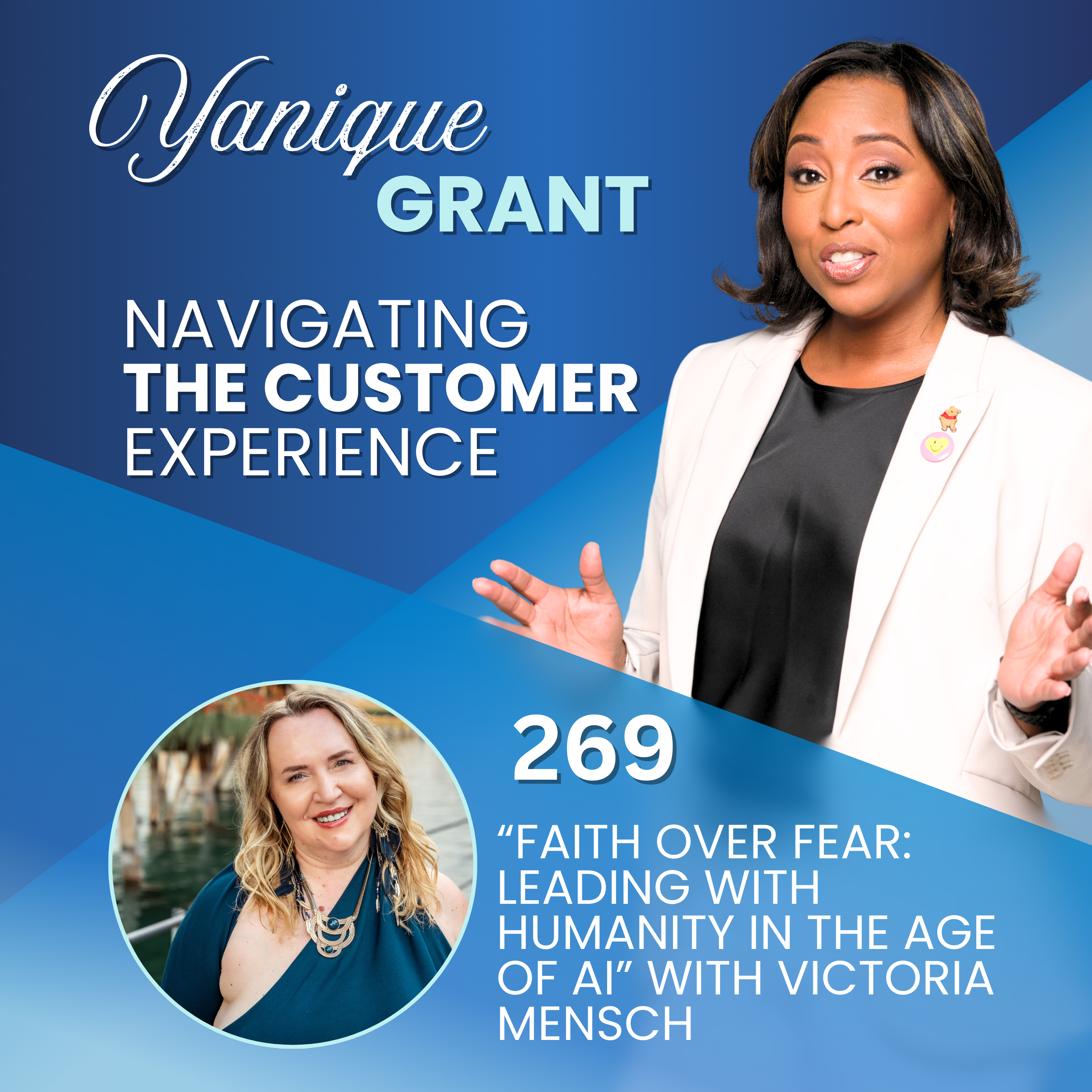
In a world where disruption is constant and leadership expectations are rising faster than organizations can adapt, senior leaders need more than inspiration, they need the mindsets, tools and confidence to lead real transformation. That is what Victoria delivers.
She has a PhD in Psychology, MBA from UC Berkeley, and 25+ year Silicon Valley veteran. Victoria has spent her career at the intersection of innovation, human behavior and executive performance. As Founder & CEO of the Silicon Valley Executive Academy (SVEA), she has designed and led immersive development experiences for Global Fortune 500 organizations, scaling companies and senior leaders who refuse to be left behind in the age of AI and rapid change.
Victoria’s keynote cuts through theoretical noise and delivers practical, actionable frameworks leaders can use immediately, drawing from her V.I.T.A.L. leadership method – a proven approach to aligning teams, accelerating innovation and sustaining momentum. She helps leaders elevate their influence from great to exceptional, and their organizations from reactive to transformative.
Questions
- Can you share your journey in your own words and how you got to where you are today?
- You’ve spent over two decades in leadership. What three to four qualities do leaders need to thrive in today’s fast-changing 2026 environment, regardless of the industry.
- How can someone retrain their mindset to see failure as a learning opportunity—especially if they grew up believing that mistakes and failure are unacceptable?
- If you had to choose one word for 2026 that leaders should adopt as their mantra, what would it be?
- Now, could you share with our listeners one tool, application that you absolutely can’t live without in your business or in your day to day, operating your life. What’s that one tool if you were to pick one?
- Could you also share with our listeners maybe one or two books that you’ve read, it could be books that you’ve read a long time ago, or even one that you’ve read recently that had a great impact on you, either professionally or personally.
- Now, we always like to ask our guests, what’s the one thing that’s going on in your life right now that you’re really excited about, something that you’re either working on to develop yourself or your people.
- Where can listeners find you online?
- Now, before we wrap our episodes up, we always like to ask our guests, do you have a quote or saying that during times of adversity or challenge, you’ll tend to revert to this quote if for any reason you get derailed or you get off track, the quote kind of helps to get you back on track. Do you have one of those?
Highlights
Victoria’s Journey
Me: Victoria, so even though we read a little bit about your bio formally to our listeners, we always like to give our guests an opportunity in their own words, to share a little bit about their journey, basically how you got to where you are now, from where you were then.
Victoria thanked Yanique for such a kind introduction. What Yanique said that most of her career, most of her work experience, really comes from Silicon Valley. So, she landed in Silicon Valley more than 25 years ago, and it was really in awe with everything that was happening here, it was in the middle of dot.com boom, if you can imagine, so totally different world. When you go to Silicon Valley and you see that innovative culture, so many people who are very enthusiastic about changing the world, who don’t really see the barriers of changing the world and challenging the status quo, that’s a very exciting atmosphere.
So, she’s been fortunate to grow with Silicon Valley as well. And through the progression and evolution of technology, as per, the semiconductor industry moved to in the price software industry, large companies, small companies, and a few years ago, she moved into innovation consulting and executive education area and eventually started the academy. Was really the help that they can provide to tap into that Silicon Valley innovation playbook. When you’re outside of Silicon Valley and you see what’s going here and all the immersion technologies that are coming from here, there are things that you can learn, there are some principles that you can gain from Silicon Valley companies that allow you to be innovative and sustain that innovative spirit and competition and grow and scale.
Key Leadership Qualities for Thriving in a Fast-Changing 2026 Environment
Me: Now, a big part of your work over the years has been in leadership, and I’m always a firm believer that mud flows from the top of the stream. In any organization, the leader has to be someone who can really inspire and motivate a team, regardless of the industry that they’re in. Based on your many years of experience spanning over two decades, what would you say are three to four qualities that a leader, regardless of the industry that they operate in, need to have in order to thrive in this environment that we’re currently operating in, in 2026, with so many things happening.
Victoria agreed, exactly, it’s very interesting. We keep talking about leadership and how important it is, and the leadership is evolving as well, especially now in the age of AI. So, this stresses the leadership really becomes one of the most critical elements within any company. And the other thing that is myth that we’re talking about usually when we say leader, we think that’s the manager, right? So, what’s an executive? But leadership actually cuts through so many layers of the organization. So, we’re not just talking about top leadership. We’re talking about like each person in their role can and should really explore leadership that way. And when we when we’re talking about this, she thinks what’s getting even more critical now than before, is really having that agency over your choices and your judgment, and that can be practiced on so many levels, not only on the organizational level, how to build the organization, how to lead the organization, but within your particular role, wherever you are in the hierarchy of the organization, or if it’s your own business, that self-responsibility and empowerment of your own choices, that’s actually what separates great leaders from not so great leaders.
Me: Okay, so, so we want to break it down for our listeners, so as I had asked originally, like, what are three to four qualities you think they need to have?
Victoria stated yes, self-responsibility and proactiveness, that’s the quality that is really getting elevated right now, making the choices what to be responsible for, and claiming that responsibility each and every day.
The second one she wants to highlight is curiosity. So, staying curious in that disruptions that we’re talking about. So, disruption is constant, right? So, what we know is that we don’t know what’s going to happen, that’s for sure that things are going to be disrupted. When we talk about disruption, it’s on so many levels as well. It could be technological disruptions, it could be climate disruptions, it could be political disruption. The constant here is really to stay open to the fact that things are going to change and be able to separate in that particular environment. What are the things that you can control and what are the things that you cannot control? So, in things that you can control, go back to number one, the agency takes over and take responsibility for that. So, that’s the second one.
And the third one, she thinks that’s very important right now, is continuous learning, things are going to change, disruption is going to continue. Continuous learning and improvement and gaining those skills, learning from mistakes, not being afraid of failure, that’s a big, big page from Silicon Valley mediation playbook, not treating failures as failures, but as lessons. So, that’s the learning element on that leadership.
Me: So, self-responsibility, curiosity and continuous learning. Awesome.
Reframing Failure – How to Shift From Fear of Mistakes to a Growth Mindset
Me: Now, it’s funny you said that they shouldn’t be afraid to fail. I grew up in a society where, if you’re a director in a company and that company goes bankrupt, you can never be a director in another company again. And I know the United States is not like that, you could be a part of many different bankrupt companies and just start a new business the next day. But that mindset that you would have developed, they say your personality forms by age five, that mindset that you’d have developed that failure is bad, making a mistake is bad. How do you retrain yourself to recognize that it’s okay to try and fail, and even if you fail 31 times, on that 32nd time when you have success, you’re probably even more appreciative of the success that if you had been successful on the second attempt. How do you retrain your mind to get to that space?
Victoria stated that she really like the way Yanique post the question, how you retrain? Because it is a practice. So, this is something that you can practice. What’s important to realize the feelings and emotions behind that failure, and that emotion is really fear. So, when we look ahead, we imagine the worst possible scenarios, and we project those worst possible scenarios on the current moment.
So the first, she’d say step in practicing that is really standing still at that particular moment, and rationally think about, am I in danger right now? So, today, I’m afraid to make a poor choice, the wrong choice, am I in failure right now? Today, I’m afraid that, for my financial security, for example, eventually, if I fail, I’m going to lose so much money and I’m going to die poor and alone and sick, right?
So, that’s all these fears from the future, unrealized fears we’re placing in this particular moment. But then when you go back to the particular moment and they say, well, actually, right now I’m okay. I still have a few dollars in my purse. I’m not going to starve today. I’m still healthy, for example. So, I’m not going to die of sickness today without medical care. So, going back to the present moment, that’s the practice. So, that’s an individual, personal practice, that’s one.
And the second one, in the rational level, you have an equal probability of everything going right, the same probability of everything going right as the probability of everything going wrong. We, as humans, we tend to go toward negative scenario, again, based on that fear, and that very strong survival instinct. But the practice part is to say this, there’s an equal probability, what if everything is going right?
How would this impact my decision, if I know for sure that is going to work out? So that’s the mindset that you want to train.
Me: I like the fact that you said you have an equal probability of success as an equal probability of failure, because, as you mentioned, people tend to, for some reason, dwell on the side of negativity, all the things that could go wrong, versus maybe there’s an equal amount of things that could go right, but are we focusing on that? No, we’re giving our attention to the things that are going to go wrong. So, I like that you phrased it in that way, that the probability is just as equal for the negative as the positive.
Victoria agreed, so, you want to equalize it as you’re making that decision. You’re going through that process of making a decision, at least, you want to give yourself a chance to bring up a possibility that it’s going to work out. So, if you know for sure, you have 100% certainty that it will work out, what would your decision be right now and then, you can make your choice?
One Work for 2026 – The Leadership Mantra for the Year
Me: So, if you had one word that you could choose for 2026 that leaders should really dive into, maybe make it their mantra for the year. What would that one word be?
Victoria shared that her word would be humanity. She wants to say the word humanity, being in the field that she’s in, they’re working with leaders who are in charge of implementing technologies as artificial intelligence. So, there’s a lot of fear, there’s a lot of uncertainty how it’s going to impact the organizations, the careers, and she thinks that when we keep that human element on top of our mind as leaders, realizing that this technology, again, speaking of opportunity, is an opportunity for us to actually free up so much space for creativity, free up so much space for connection between people. So, we’re going to make different choices. So, how do we make the choice of not just being faster and cheaper but being better in terms of our connections with other humans.
App, Website or Tool that Victoria Absolutely Can’t Live Without in Her Business
When asked about a tool or an application that she can’t live without, Victoria stated that it’s not that easy for her to pick one, because she really does not like to rely on just one tool. So, there’s a lot of artificial intelligence, productivity tools that she’s exploring every day in her business, lots of automation that really comes from what are the areas in how she spent her day, where she really does not want to spend her day. So, what would be the best things to automate so it can free up that time for creativity, for value that only she can build.
So, she uses a variety of AI tools and different tools for different purposes. If there’s research, then she uses one AI, if there is a copywriting, there is another AI, if there is analytical financial automation, that’s a different tool that she uses. So, it’s very hard for her to pick one, but in general, everything AI related.
Me: I want to give our listeners like a good resource that they could tap into. And typically, our guests, they come on, they’d probably say ChatGPT, or they would say Claude.ai, but is there any other one, may not be as popular, but you find it to be really impactful that you could share as a resource with our listeners, that they could tap into learning or getting to know more about that.
Victoria shared that she’d say Lovable. She would definitely encourage people to look at Lovable, that’s the vibe coding tool. So, it can help you to build applications without knowing codes or landing pages or provide copy. But mostly if you have an idea about an application for business that you did not know how to do before, if you do not have a technical skill, this is something you can do right now. So, you go to Lovable, and you tell that tool what you want to build, and that tool builds it for you, so you have a practically, pilot ready product in a few minutes.
Books that Have Had a Great Impact on Victoria
When asked about books that have had a great impact, Victoria stated that the book that she read quite a long time ago was actually, she thinks it was called Digital Darwinism: Surviving the New Age of Business Disruption. So, for complex corporate Darwinism, something along those lines, and it was about digital transformation, and how companies goes through the innovation process and make choices, and what are the barriers of that innovation within the company.
What Victoria is Really Excited About Now!
When asked about something that she’s excited about, Victoria stated that she’s personally really excited about all the possibilities of automation that artificial intelligence provides. So how many things that are really time, like energy drainers and time drainers that we can program in a flow to AI agents. So, that’s what excites her, that’s what she thinks about all day, how to really reconstruct the processes, publish processes and make them much more efficient and better.
Connect with Victoria Online
Website – www.svexecutive.academy.com
Quote or Saying that During Times of Adversity Victoria Uses
When asked about a quote that she tends to revert to, Victoria stated that yes, she does. So, the quote that she really likes for herself, it’s called, “Faith over fear.” Every time she is making decisions, she does come back to that quote and say along lines of the conversation they had just now, that she has faith that will work out in her favor, and she puts that faith over here.
Me: You got to believe.
Well, thank you so much, Victoria, it was really a pleasure, for you to jump on our podcast today. I’m sure you’re a very busy lady, and you took time to kind of hop on and share with our listeners a little bit about your journey, leadership qualities that are critical for success in any industry. That one word that you would believe people should hold on to for 2026, humanity, despite all of the digital compliments that exist for us to use and enhance our businesses and enhance our process flows, there’s still a human being behind every one of those interactions, and we should still aim to have deep connections with each other despite the digital connection. So, I loved our conversation, I loved a lot of the nuggets that you shared with us, and I just want to express my deepest gratitude to you for sharing this information with us today.
Please connect with us on X @navigatingcx and also join our Private Facebook Community – Navigating the Customer Experience.
Links
The ABC’s of a Fantastic Customer Experience
Grab the Freebie on Our Website – TOP 10 Online Business Resources for Small Business Owners
Do you want to pivot your online customer experience and build loyalty – get a copy of “The ABC’s of a Fantastic Customer Experience.”
The ABC’s of a Fantastic Customer Experience provides 26 easy to follow steps and techniques that helps your business to achieve success and build brand loyalty.
This Guide to Limitless, Happy and Loyal Customers will help you to strengthen your service delivery, enhance your knowledge and appreciation of the customer experience and provide tips and practical strategies that you can start implementing immediately!
This book will develop your customer service skills and sharpen your attention to detail when serving others.
Master your customer experience and develop those knock your socks off techniques that will lead to lifetime customers. Your customers will only want to work with your business, and it will be your brand differentiator. It will lead to recruiters to seek you out by providing practical examples on how to deliver a winning customer service experience!